Company News
Introducing Product Studio: where product anchors the full policy lifecycle
Federato

April 15, 2026
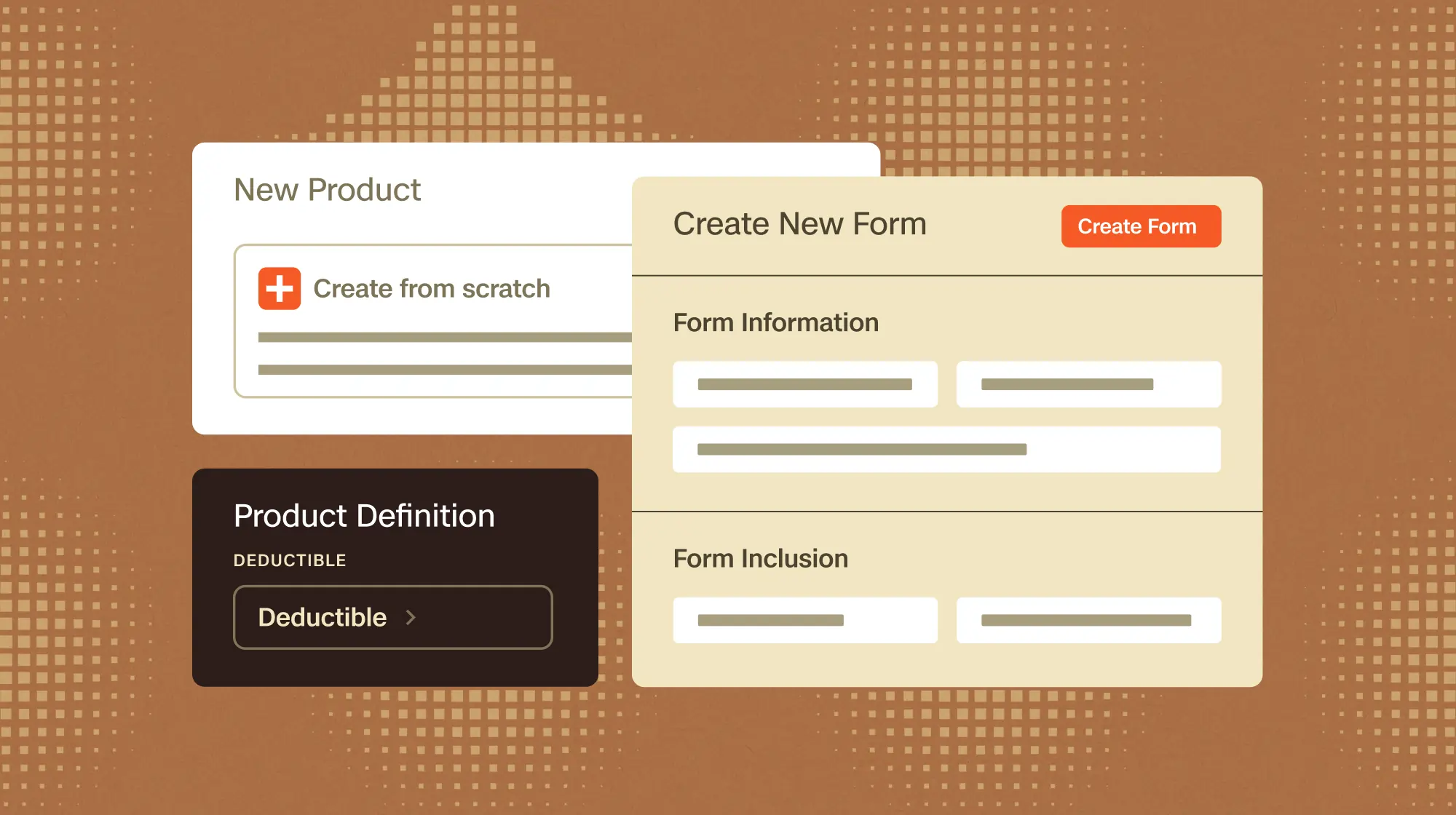
Today, we’re introducing Product Studio, Federato’s structured product definition layer, where insurers configure and manage products directly in the platform. Instead of spreading product logic across multiple systems, teams define a product in one place, driving clarity, consistency, and speed across the lifecycle.
Legacy product management tools were built for a single moment: the transaction. Once a policy is bound, the job is done. Every change after that, whether it’s a rate update, a new form, or an eligibility tweak, turns into a manual scramble across systems that don’t talk to each other.
Product Studio is built differently. Define a product once, and every downstream decision reflects it, from submission through renewal.
Product configuration isn't a new problem. Old Core platforms have tried to solve it before, but failed for two reasons.
Legacy tools weren’t designed from the ground up. They’ve been cobbled together over time, with a rating engine here, an acquired forms tool there, a workflow bolted on several years ago. Resulting product “definitions” live nowhere and everywhere at once, and there’s no complete view of what’s actually in force. Changes feel risky because you’re never sure what they’ll break.
This fragmentation runs all the way down to the product model itself. Each line of business operates on its own schema, with different data models, exposure definitions, and product hierarchies. A unified interface sits on top, but underneath, every product behaves differently. Teams can't launch new lines of business without building from scratch and governance can't hold without a consistent structure.
Different product elements have always lived in different places. Pricing sits in raters, forms live in document systems, and eligibility logic hides inside workflows. A product manager tasked with a change can’t just make it. They have to write it up, hand it to IT, wait for the sprint, and hope nothing gets lost in translation.
Legacy systems don’t just slow teams down; they invert the org chart. Product intent gets held hostage to technical bandwidth.
Product Studio gives you one structure that every decision executes against.
Instead of relying on different product models, Federato uses an opinionated, exposure-level schema that maintains a consistent hierarchy. This establishes one configuration experience, applicable to all lines of business, so teams can finally scale without rebuilding each business unit from scratch.
Within that structure, Product Studio also brings core components together.
Instead of making updates in three different places, one change made in Product Studio carries through the policy lifecycle without manual rework.
"Federato natively works with endorsement forms and attachment rules. We actually learned from their best practices, and got to apply that into our ecosystem to make future implementations go even better. From a technology standpoint, configuring that form, making sure you've got the right attachment rules and you're pulling in the right data, has been a great experience." - Craig Manning, VP Digital Products at MISSION
As books grow, governance tends to break, especially as product changes increase in volume and complexity. On Old Core platforms, what’s actually in force is a question nobody can fully answer. When a discrepancy surfaces in situations like an audit, a coverage dispute, or a regulator inquiry, teams dig through spreadsheets, desktop notes, and half-documented configs trying to reconstruct a decision from 18 months ago.
Product Studio removes that uncertainty. With centralized product definition, there's always a clear picture of what's live and what changed.
With structure, execution, and governance aligned, the impact shows up in speed to market and how far your team can stretch.
New products launch faster because changes carry through automatically. Updating a rate, form, or eligibility rule flows through to rating, workflow, and servicing. When a single product natively covers all 50 states, expanding doesn't require rebuilding logic across systems.
“We were able to launch two programs and it was a very clean implementation. The series head was super excited and has been able to write a ton of business.” - Sujatha Raju, Chief Technology Officer, MISSION
This also changes who controls the work. Product teams make changes directly, without waiting on engineering to rebuild them across systems. IT stops being the bottleneck and becomes the authority on what goes live and when, enabling them to support more business units without adding headcount.
As the number of products and covered states grows, maintaining consistency typically becomes more expensive. With a shared product definition, teams reuse the same structure instead of rebuilding it for each variation, so scale doesn’t introduce fragmentation.
This is what’s been missing: a foundation that actually holds as the business grows. Product has always been the core of what insurers sell. Now it can be the core of how they operate.
Ready to see Product Studio in action? Request a demo.