Insurance
Why insurance billing reconciliation breaks down on legacy systems
Federato

August 28, 2026

When a policy changes, the premium collected should change with it. It should be that easy. But on the old core, it often isn’t that simple.
For finance teams working on legacy insurance billing systems, a policy change can kick off a much longer reconciliation process: checking whether the endorsement reached billing, confirming the invoice reflects the right amount, and investigating anything that doesn’t add up. What looks like a small operational issue can become expensive at scale as transaction volume grows and Finance spends a lot of time making sure numbers agree.
The underlying issue of reconciliation starts with how policy administration and billing systems on the old core systems were originally built. Because they were designed separately, for different purposes, and stitched together over time, each represents data differently, making it difficult for them to communicate.
The policy administration system is built to answer the question: what happened to the policy? It answers using data on risks, coverages, effective dates, and premium. The billing system is built to answer: what does that mean financially? It focuses on data such as invoices, payment schedules, receivables, and cash.
When a policy transaction occurs, the information has to be translated from the policy system into a financial transaction the billing system understands. On the old core, that translation often happens through batch jobs, file transfers, or manual work to ensure the data agrees. Because these data transfers don’t happen in real time, financial reporting can quickly become stale.
For growing carriers and MGAs, scale should increase the value of the business, not the operational burden of running it. But on legacy systems, as transaction volume grows, reconciliation takes up more of Finance’s time, leaving them less time to use financial data to improve the business.
Unlike old core systems, Federato ties financial impacts directly to the policy changes that caused them. Because Federato’s policy administration and Billing & Payments features use consistent data definitions on a single data foundation, a policy change can generate the corresponding financial events automatically, without billing having to reconstruct what happened after the fact. Here are two examples of what that looks like in practice.
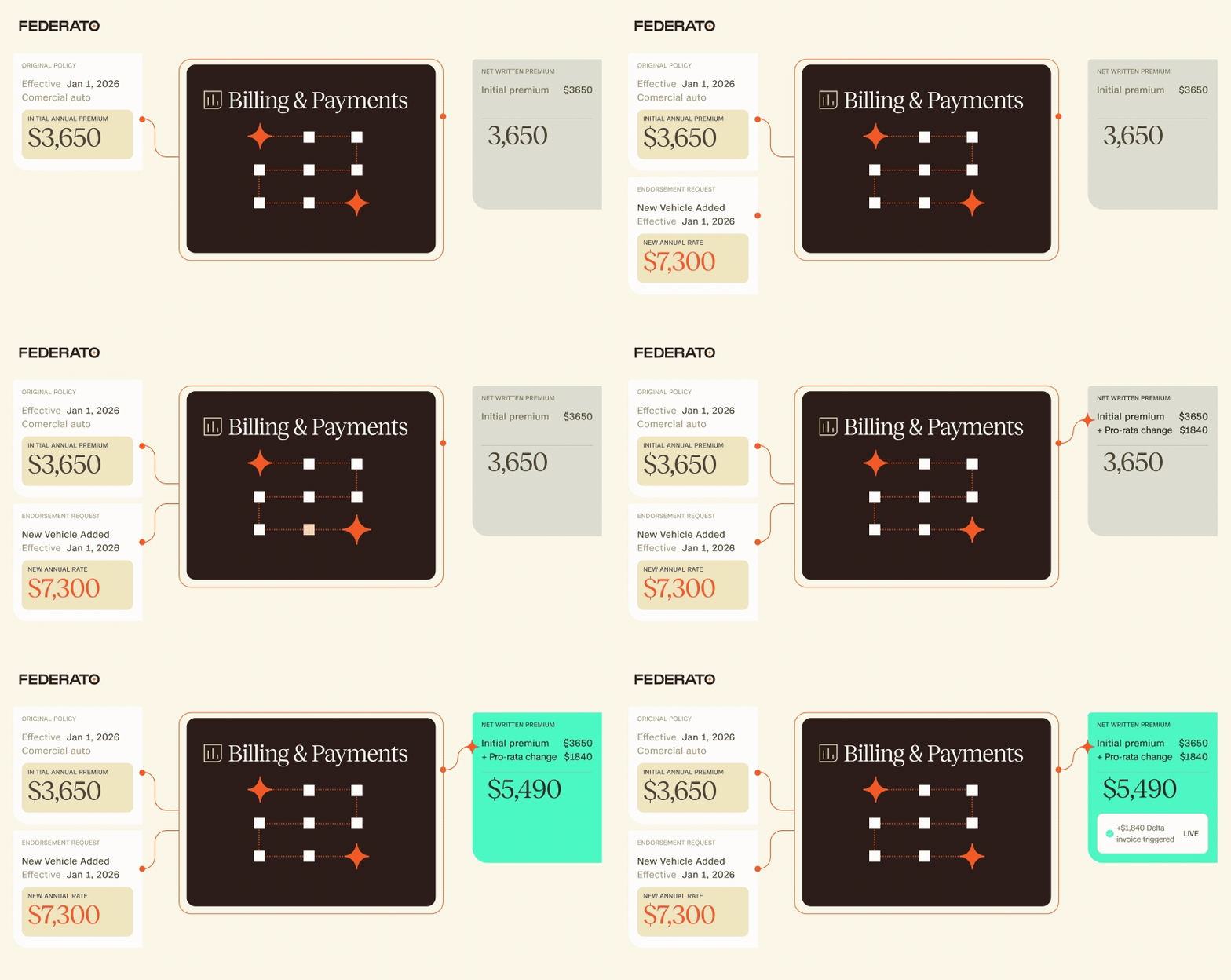
Consider a commercial auto policy that is effective for one year. Six months into the term, the insured increases coverage by adding a new vehicle, changing the policy’s premium and the amount due for the remainder of the term.
In Federato, that policy change flows directly to its downstream financial event. The system automatically calculates the appropriate pro-rata premium adjustment, updates the receivables sub-ledger, and generates the corresponding invoice, all in real time.
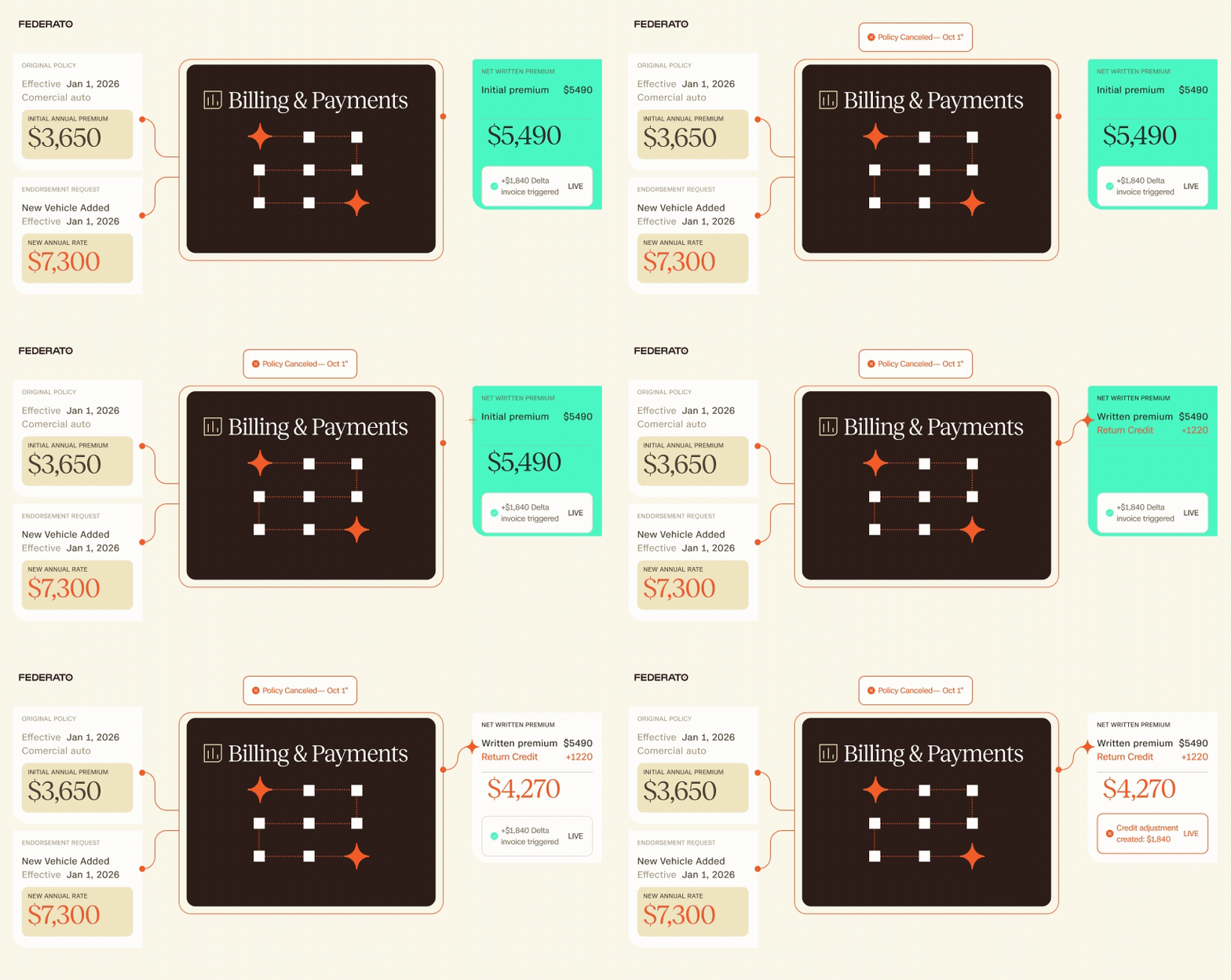
Directly connecting financial impact to policy changes also matters when a policy is cancelled. Consider the same commercial auto policy after its midterm endorsement. If the policy is later cancelled for nonpayment, the amount to return depends on everything that happened before the cancellation: the original premium, the midterm adjustment, and how much premium was earned before coverage ended.
Federato uses that transaction history to calculate the return premium and create the corresponding credit down to the exact cent. Because all financial adjustments remain tied to the policy history, the financial impact is easy to trace and audit.
When the policy lifecycle runs on one connected foundation, teams can make decisions with a more complete picture of the business. Finance can trust the numbers without reconciling them against a separate version of the policy. And over time, billing outcomes can reveal another dimension of portfolio performance, surfacing patterns in delinquency, non-payment cancellations, and premium retention across different segments. That context can shape how leaders price and structure their products to drive more profitable growth.
Want to see how your billing data can become a competitive advantage? Book a demo.